The fuel man
And the volcano ABC visits
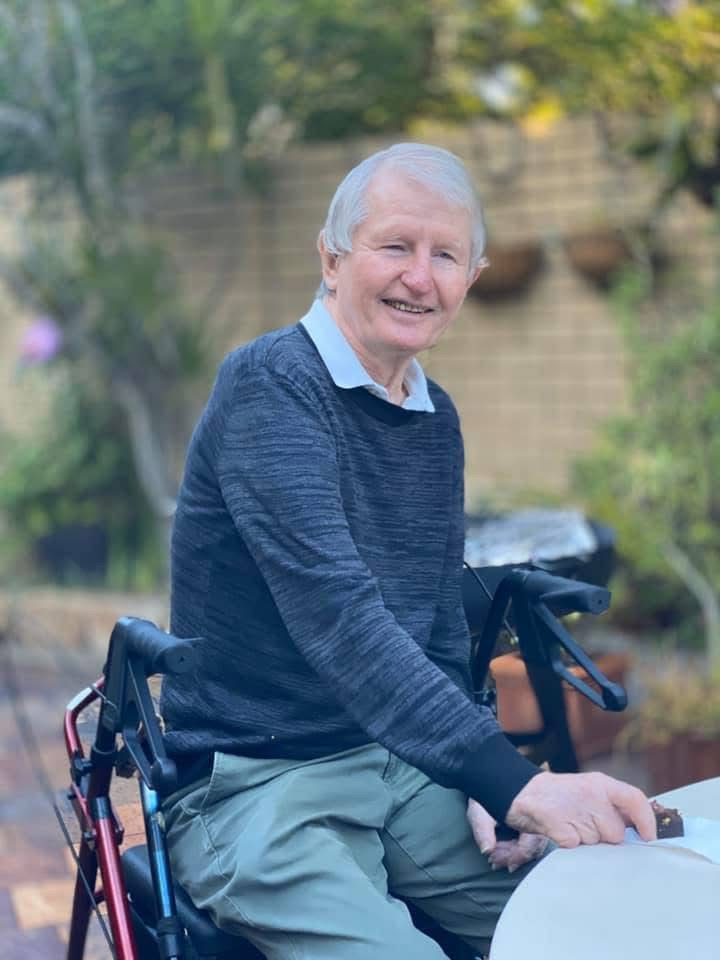
SEAN DORNEY, THE VOLCANO — AND THE FUEL MAN
I first properly crossed paths with Sean Dorney in the middle of the 1994 Rabaul volcanic eruption.
It was hardly an ideal setting for making friends.
I was at Tokua Airport putting my women and children on a Mobil charter flight to safety when a Hercules arrived. Out stepped Sean Dorney and his ABC crew, cameras and microphones at the ready.
I saw Sean and immediately castigated him over some of the ABC’s reporting of the eruption.
“Sub-editors!” was his defence.
An unbelievable assertion, of course. Apparently journalists wrote everything perfectly and mysterious people called sub-editors were responsible for anything I didn’t like.
Then, having endured my lecture on responsible journalism, Sean had the nerve to ask me how he could get into Rabaul.
“As a journalist, you won’t,” I told him. “With me, you will. I’m the fuel guy.”
There was just one condition.
“Don’t bloody sensationalise it!”
“Okay, okay.”
We covered the ABC cameras under a sail, loaded everyone into the four-wheel drives and set off in convoy with my crazy German partner, Jurgen.
At Pila Pila we came across a checkpoint. Ray Martin and some Japanese journalists had been stopped and weren’t being allowed through.
We didn’t stop.
We were the fuel people.
As we sailed past, Sean couldn’t resist waving cheerfully out the back window of my ute at his stranded journalistic colleagues.
There are few things more satisfying than being a famous television journalist — except perhaps being a fuel man during a volcanic eruption.
Our first stop was the Mobil depot. The mountain was roaring away in the background.
Then we headed to the wharf.
The harbour was buried under pumice, perhaps three feet deep in places. With the ABC cameras rolling, I ceremoniously pushed my foot through the pumice until I found water underneath.
I made my official pronouncement:
“The harbour is open!”
I had no authority whatsoever to open harbours, but nobody else seemed to be doing it.
Next stop was my house.
Except we couldn’t drive there.
The road was blocked, so we walked along Grove Street through this devastated landscape until we reached what had once been our home.
It was a ruin.
The roof was down. Mud and ash had come through the windows of the lower floor. Everything looked finished.
Then from the back came a shout from Jurgen.
There, emerging from the mud, was Lady, our dog.
Tramp, our other dog, was nearby.
The cat proved more difficult, eventually located among the broken rafters.
Fortunately, beneath all the ash I still had my secret stash of tinned fish. Out came the machete, cans were opened, and our three surviving pets finally got a decent meal.
At this touching moment, Sean did what journalists do.
He shoved a microphone in my face.
“How do you feel?”
I looked at the wreckage of our home.
“We can’t live here.”
Not exactly Shakespeare.
Earlier I had given an emotional account of the evacuation of five random unaccompanied children, including one breastfed baby, and I had already done enough crying for one day.
Now the ABC had its story, but there was another problem.
They had to get the footage back to the airport in time to transmit it.
So the race for Tokua began.
As we approached Pila Pila, I noticed water starting to seep out from a line of banana trees.
I knew what that meant.
“We need high ground. Now.”
I pulled behind a solid brick trade store while the ABC crew looked anxiously at their watches. Every second mattered if they were going to make their aircraft.
About thirty seconds later — only metres from us — the ash dam in the valley broke.
A wall of water, mud and volcanic slurry perhaps six feet high came roaring past.
Nobody suggested getting out to determine whether it was fresh water or salt water.
For once, investigative journalism had its limits.
When the torrent subsided, we were off again.
The journalists were staring at me with a new expression.
Disbelief.
Perhaps even awe.
“How did you know?”
Simple.
“I was here yesterday. Same thing. I knew the signs.”
For approximately thirty seconds I had achieved the status of volcanic expert.
Then Jurgen and I reverted to type.
The journey back to Tokua became an unofficial four-wheel-drive Grand Prix, with two lunatics racing through the aftermath of a volcanic eruption while the ABC crew bounced around worrying about several hundred thousand dollars’ worth of cameras in the back.
We made the charter.
Apparently the story went out the next day and was a cracker.
I wouldn’t know.
We were living in a village by then and couldn’t see the television.
Years later Sean became a good friend in Chelmer, but I still remember that extraordinary first adventure together: the Hercules, the volcano, the buried house, three rescued pets, Ray Martin stuck at a roadblock, a six-foot wall of volcanic slurry, and Sean Dorney waving triumphantly from the back of my ute.
All because, in Rabaul during a volcanic eruption, an ABC journalist couldn’t get through —
but the fuel man could.